Top of Sinai
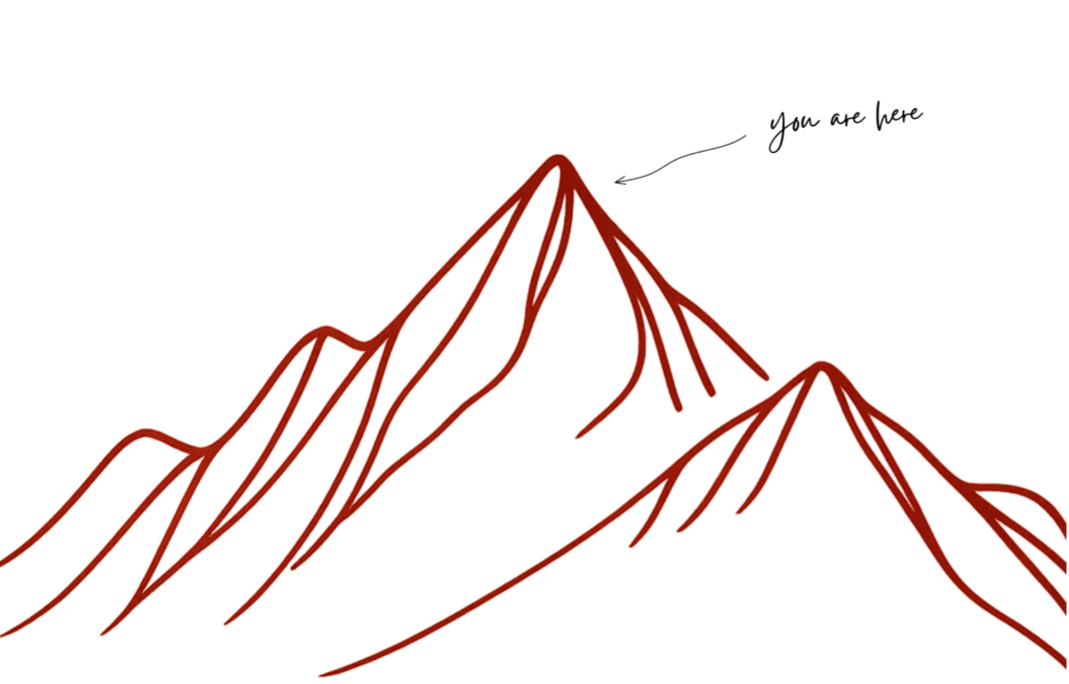
One approaches god with humility
Even a god one does not believe (or believe in)
This is yet another opportunity
To reconsider one’s cosmology
And one’s ontology of god
Briefing. At the top of Sinai, I encountered Yahweh in all his glorious ego, while also experiencing the corresponding ego of humanity. A fiercely egoistic god yields an egoistic human psyche and culture, leading to xenophobia, evil and ultimately cannibalism. We then asked: What kind of god do we need? That is, “What god’s gonna do?” Implicitly, we are inviting God to our orientation workshop, to progress his own mythic hygiene. This begs the question of whether there is a corresponding condition for immortal beings – instead of amythic death anxiety, amythic immortality anxiety.
God’s Ego and Human Ego
Music: “God’s Ego”
Scenography (Sc.)
We see the words of god in text
We hear the words of humanity
Yahweh:
I am your God
I rescued you from bondage
You will not have other gods
You will not visualise me (Don’t look at me!)
Or anything living
You will not bow to or serve such images
If you reject me, I’ll punish your children
And their children
And their children
And their children
And their children
And their children
So, love me
And do as I command
And I will be kind
For a thousand generations
Master of Scenarios:
What I want is what’s important
I intend to win over others
I am what matters – and my family and friends
I can’t care about everyone and don’t want to
They are not us
I am indifferent to their suffering
Fuck’em

Presenting the message to god
The message from the community, inscribed on Tablet #1
[Title Card]
Each of you put sword on thigh
Go back and forth
From gate to gate throughout the camp
And slay brother, neighbour, and kin
Music: “Tablet #1”
Participants:
(Chanted)
Big Bang
Big History
Big Gods
Lead to the Holocaust
Moses:
Blessed art thou, lord our god, King of the universe
Participants:
Culpable for the horrors of this world
Moses:
Blessed art thou, lord our god, King of the universe
Participants:
We wrestle with the cosmos and your will
Moses:
Blessed art thou, lord our god, King of the universe
Participants:
To whom we pray…
(Everyone looks at you)
Master of Scenarios:
What is your prayer?
Sc.
By prayer, let us mean collaboration
We have confronted god with his culpability
With the persistent title card
And our horrific, iconic image of the massacre
Now we pose the collaborative question
You:
What do we do while waiting
Participants:
For the next Holocaust
You:
How do we prevent
Participants:
The next Holocaust
You:
How might new mythic narratives and ritual practices prevent
Participants:
The next Holocaust
You:
How might changing the story change the world?
Briefing. Being omniscient, god fully understood my thoughts and feelings. I concluded, therefore, that god fully recognised his culpability in the horrors of the world. The logic felt inescapable, particularly given my lack of belief in free will. The evolution of the cosmos leads to the Holocaust. How might we redesign this? We need a different kind of god.
What god’s gonna do(?)
Exactly what kind of god do we need in order to change the story?
Music: “What god’s gonna do?”
Master of Scenarios:
Let’s assume you have power
For the sake of this tale
To compel what I think, feel and do
And so, I can’t fear you
No, I can’t fear you
Since you compel what I think, feel and do
Everyone:
What god’s gonna do
Go ahead, go ahead
I can be fearless with you
What god’s gonna do
Go ahead, go ahead
I can be fearless with you
The more power I concede
The greater my culpability
Master of Scenarios:
I will be fearless
When in doubt, be fearless
I will be fearless
With you
Sc.
Hermes arrives with a letter and wool sack
He opens the letter
Ashera materialises from the letter
She joins - synthesises with - Mother and Miriam
Briefing. During my workshop experiences, I frequently expressed a violent male archetype represented by Moses, the Father and Yahweh, and a protective and wise female archetype associated with the Mother, Miriam, the Muse and now Ashera. This was vigorously discussed, with some participants suggesting this was a particularly “old school” and unhelpful application of gender constructs. I responded that I was (authentically) drawing upon messaging and experiences I associated with my mother and father, without any intention to comment on gender roles and archetypes. In my life experience, I said, female energy often tended toward instruction and protection, while male energy often tended toward egoistic aggression.
Here, the female archetype offers a hypothesis for the kind of god that might be needed to un-wind the emergence of xenophobia and cannibalism – a god of radical oneness with sentient life, all matter and energy. Upon this articulation, we and the cosmos “try on” that vision of oneness, which I call the Omega Point, following Pierre Teilhard de Chardin (1881–1955) and Frank Tipler (1947- ). (See: Tipler, F., The Physics of Immortality, 1994).
Mother-Miriam-Ashera:
(To Yahweh)
God leads to human nature
Human nature leads to god
You emerged with the species
What god will do?
One – who acknowledges the infliction of divine ego
One – who acknowledges the horror of divine error
One – who atones, becoming one with sentient life
One – who becomes one with the cosmos
One who becomes one
One who becomes one
All is one – as if one
The Omega Point
Briefing. Visualising or describing the omega point is an intellectual and sometimes emotional exercise and can be supported by the Golden Calf technologies. During the workshop, we shared our ideas in diverse ways. Some created images, sounds, movements and texts. However, I did not attempt an original representation. Instead, I drew upon a passage I recalled from the conclusion of Herman Hesse’s Siddhartha (1922), where Govinda kisses Siddhartha’s forehead and experiences a type of eternal oneness and reconciliation of opposites. My actual experience was ineffable, but that passage, at least metaphorically, captures some sense of essence.
Music: “Omega Point” (First measure of Miriam’s Theme)
Caution: Do not play on a loop for extended periods
We expect potentially adverse responses in some individuals
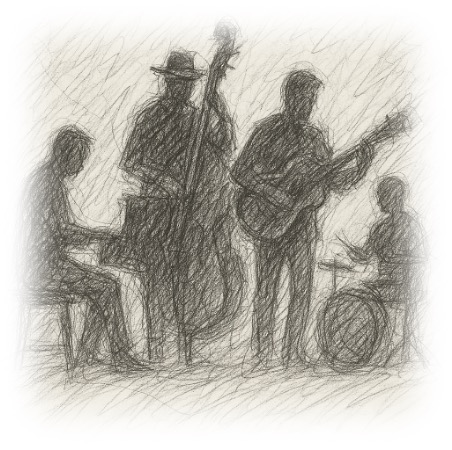
Sc.
We stare into the face of Siddhartha
Space-time, free will and the self become illusory
Visions draw upon the scenarios from across the orientation
We see or sense the coalescence of the Omega Point
All is one, as if one
Mother-Miriam-Ashera:
There is one sound that represents this oneness
Only you hear that sound
Shema!
Listen!
